The first time I handed a seller a 360 virtual tour link, she texted back within five minutes: “My sister in Phoenix just walked through the kitchen and noticed the pot filler.” That’s the promise of 360 virtual tours when they’re hosted well and easy to share. They put people inside a space without an appointment, they reveal details static photos miss, and they pay off when the infrastructure behind them is steady, fast, and thoughtfully configured. Getting that right takes more than uploading a few panoramas and hoping for the best.
I work with real estate teams that publish dozens of tours each month, from compact condos to 15,000 square foot custom builds. The patterns are clear. Tools matter, but so do publishing workflows, link hygiene, and performance on aging phones over spotty 4G. When a tour buffers, breaks, or looks flat, you lose buyers in the first ten seconds. When it loads instantly and the transitions feel smooth, your property feels more premium. Below is what actually holds up in the field.
What “good hosting” looks like in practice
You can get a 360 tour to play on nearly any platform, but a professional standard means four things: uptime, speed, compatibility, and control. If those slip, you invite last‑minute scrambles before a listing goes live.
Uptime is the obvious one. When you run a listing presentation with a tour embedded on the big screen, a 500 error at 7 p.m. is a small disaster. I track uptime the same way I track showings: consistently. Anything below 99.9 percent over a quarter gets replaced.
Speed is the one buyers feel immediately. Large 8K equirectangular images are heavy. Good platforms serve multiple resolutions, then negotiate the right size on the fly. On my test set, a cold‑cache first panorama should be interactive within two seconds on LTE. If it takes four to five seconds and then stutters during the first rotation, you either need to compress assets, switch to a CDN‑backed host, or both.
Compatibility matters more than most marketers admit. A tour that looks creamy on a 27‑inch iMac might jitter on a budget Android with an older browser. Look for platforms that use WebGL with graceful degradation and that publish a clear browser support matrix. If the vendor cannot describe how they handle iOS memory limits or low‑RAM devices, expect surprises.
Control is the quiet hero. You need vanity URLs you can change after a price reduction. You need per‑tour privacy settings, password gates for pre‑market releases, and the option to disable downloads when a seller requests it. You also need analytics that separate total visits from unique visitors, and that log average dwell time in hotspots or rooms. That data affects how we plan real estate video, where we stage more heavily, and how we adjust real estate floor plans to highlight a circulation path buyers actually use.
Platform families and where they fit
There are three broad approaches to hosting 360 virtual tours. Each has its place, and it’s common for a busy real estate photographer to run two in parallel.
Third‑party tour platforms are the fastest way to go from shoot to shareable link. They provide stitching, hotspot editing, floor plan overlays, lead forms, music, and branded/unbranded toggles for MLS compliance. The best known are Matterport, Ricoh Tours, CloudPano, Kuula, and EyeSpy360. Matterport in particular has deep room mapping and a polished viewer with 3D dollhouse and measurement tools, which helps when buyers want to sanity‑check the sofa that looked petite in HDR photography. The trade‑offs: subscription fees, per‑space hosting charges, and limited control over deep customization. Also, exporting raw assets for long‑term archiving can be restrictive depending on the plan.
Self‑hosted JavaScript frameworks like Panellum, Photo Sphere Viewer, and Krpano give you total control. You host the tiles or panoramas on your own server or a CDN, build a custom UI, and integrate with your site’s analytics stack. This appeals to teams with developers on hand or agencies that brand at the pixel level. I use Krpano for properties that demand bespoke interactions, such as developer previews with phased floor stacks and pre‑sale units. The risk is maintenance. Browser updates break things. You own the security posture. And when traffic spikes after a press mention, your origin needs to hold up.
Hybrid workflows leverage a third‑party host for the heavy lifting, then embed the tour on your site or inside a single‑property page that carries your domain and tracking. This strikes a balance: reliable rendering and a brand‑consistent container. Most of my clients run like this, because it taps a vendor’s CDN while keeping the marketing ecosystem in one place.
Choosing with intent: what actually matters
Feature lists blur together, so I use a handful of real tests before committing to a platform for a season.
Pricing that reflects your volume and retention strategy. If you shoot 12 tours a year, a per‑tour model with indefinite hosting makes sense. If you publish three per week, you need batch pricing and predictable monthly costs. Watch for deletion policies. You want to archive or downgrade rather than purge, because sellers call months later asking for a link to share with a friend.
Image quality controls that align with your shooting workflow. If you capture bracketed exposures and blend outside the platform for a natural HDR look, make sure the viewer respects embedded ICC profiles and does not crush the highlights when compressing. If the platform applies aggressive sharpening by default, ask if it can be turned off. Artifacts are loud in a 360.
Hotspot authoring that stays out of the way. You should be able to add, reposition, and style hotspots quickly, with labels that don’t interfere with clear lines through a room. Good editors snap to doorways and maintain consistent yaw between nodes. Bad ones leave you guessing where a hotspot lands, which leads to disorienting jumps.
Lead capture that plays well with your CRM. A form that captures email inside the tour is valuable only if it flows to your lists without manual export. Look for integrations with Zapier, native API endpoints, or direct links to systems like Follow Up Boss, HubSpot, or kvCORE. Tour‑level attribution is a must. Agents should know whether a lead came via the unbranded MLS link or the Facebook ad with real estate aerial photography.
MLS‑friendly options. Many MLS boards prohibit branded overlays, agent photos, and external links inside the media. The best platforms generate two links automatically and keep them in sync, so you do not have to build a second tour.
Accessibility. Keyboard navigation, focus outlines, alt text for hotspots, and readable contrast benefit everyone and help avoid complaints. I audit with screen readers and check whether the tour can be explored without a mouse. It will not be perfect, but effort counts.
Hosting architecture that keeps tours snappy
Even if you lean on a third‑party platform, you still make hosting choices: custom domains, cache settings for embeds, and where to store supporting assets like floor plan PNGs, agent bios, or neighborhood maps.
Pointing a subdomain at the tour vendor helps brand recognition and link trust. Instead of a generic provider link, use tours.yourdomain.com/1234‑oak‑street. Some platforms support white labeling, where the entire tour runs at your domain with their backend behind the scenes. This improves email deliverability and keeps buyers in your ecosystem.
CDN distribution is table stakes. If a vendor cannot describe their edge presence or offer regional delivery, your rural buyers will feel the penalty. For self‑hosting, pair object storage like Amazon S3, Google Cloud Storage, or Backblaze B2 with a CDN layer such as CloudFront or Cloudflare. Store panoramas as multi‑resolution tiles. Those fetch faster than a single massive JPEG.
Caching strategy matters. Set long cache headers on static assets, then version filenames when you update. For embeds on WordPress or Squarespace, defer loading the iFrame until it scrolls into view. That keeps your page speed scores up and helps SEO for the page itself.
Security is quiet but important. Enable HTTPS everywhere, force modern TLS, and if you collect emails in the tour, publish a privacy policy and use double opt‑in when possible. Avoid loading dozens of third‑party scripts in the same page as your tour. Each one chips away at performance and increases the chance of a runtime conflict.
Stitching, color, and compression decisions that affect hosting
Image preparation either saves your bandwidth or burns it. Small choices upstream pay dividends when a popular listing receives thousands of opens in the first weekend.
I bracket 5 to 7 exposures for interiors and blend for a natural HDR look, then target a gamma that keeps whites in the 230 to 240 range. Overshooting brightness kills texture on white cabinetry and creates artifacts when compressed. I export master equirectangulars at 10,000 to 12,000 pixels on the long side for most standard rooms. Larger luxury spaces or exteriors can go to 16,000 pixels, but only if the platform supports dynamic tiling and serves smaller tiles to mobile devices. Without tiling, I cap at 12,000 and lean on careful sharpness.
WebP has been the most reliable compression choice for my tours across Chrome, Edge, and Android browsers. JPEG still has broader compatibility on older devices and Safari, though current Safari supports WebP. I often serve both, with content negotiation handled by the CDN. Target a visual bitrate rather than a number. I inspect sky gradients and flat painted walls for banding. If I can see steps, I nudge quality up.
Nadir cleanup matters for immersion. Patch or blend out the tripod footprint. If your platform overlays a logo there, keep it small and neutral. People look down more than you expect when they spin a 360, especially on phones.
Structuring a tour for human navigation
A fast, beautiful tour still fails if it lacks a clear path. Real buyers are not game testers. They need signposts.
Start in the logical entry point. If the home is entered through a foyer, begin there. If the most striking angle is the living room with a mountain view, consider starting there but provide an obvious back route to the entry. The first 10 seconds set the mental map.
Use node spacing that mimics a person’s stride. In a kitchen, move from the island to the sink, then to the range wall in three hops. In a long hallway, place a node every 8 to 10 feet. Too many nodes feel jittery, too few force long teleports and break momentum.
Name rooms clearly. The overlay map or thumbnail strip should read Primary Bedroom, not Master 1, and Bedroom 3 if that matches the real estate floor plans. Consistent naming helps buyers screenshot and share. If a tour includes a detached garage apartment, label it that way and provide a visible entry point from the backyard.
Minimize signage clutter. Hotspots should be useful, not confetti. For important features, toggle on a short label that appears on hover or tap. I reserve persistent labels for functional items buyers often ask about: pantry, laundry, mudroom, and mechanical closet.
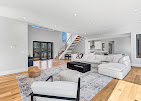
Connect floors with context. Staircases should show a glimpse of the landing above or below and preserve heading orientation when the viewer changes levels. If the platform supports a floor picker, name levels in plain language, such as Main Level, Upper, and Basement, not Level 1, Level 2.
Mobile behavior and cross‑device polish
More than half of tour opens happen on mobile. Some weekends, it’s closer to 70 percent. A design that feels elegant on desktop can turn clumsy on a phone if you are not careful.
Thumb reach dictates UI placement. Position the main hotspot arrows within easy reach of the lower third of the screen. Avoid tucking the floor picker in the top corners. Tap targets should be at least 44 by 44 pixels so you do not trigger the wrong hotspot.
Motion sensitivity settings reduce bounce rates. Many people disable motion control, or they find it disorienting when a phone’s gyro swings the view too quickly. Offer a simple toggle to switch between motion and touch. Default to touch unless the device clearly indicates a gyro is available and enabled.
Preload with a purpose. On cellular, preload only the initial panorama and the nearest two nodes. That keeps data usage reasonable for buyers on metered plans. On Wi‑Fi, you can push more assets into cache. A good platform exposes these knobs.
Test on low‑end hardware. I keep a drawer phone from four years ago for this reason. If your tour hitches there, streamline hotspot overlays, trim the first image’s resolution slightly, or simplify floor plan SVGs.
Embedding tours without torpedoing SEO and page speed
A single‑property page should feel light and quick to scroll, even with a tour, real estate video, floor plans, and a photo gallery. The trick is loading the right media at the right moment.
Lazy‑load the tour so the top of the page renders fast. Place the hero photo or a trimmed teaser video a few hundred pixels tall, then load the iFrame when it scrolls into view. For Google’s Core Web Vitals, this matters. It also means buyers see crisp HDR photography immediately, which calms impatient thumbs.
Use unique, descriptive page titles and schema. The tour itself does not carry your on‑page SEO, the page does. Add structured data for local business and listing when appropriate. If you use a canonical domain per property, redirect the sub‑domains elegantly when the listing sells and you roll the page into an archived gallery.
Craft a clean unbranded version for MLS if needed. That may mean a second page template without agent branding, external links, or aggressive lead forms. Keep both versions consistent to avoid confusion.
Sharing links that agents and buyers trust
A well‑hosted tour still needs to travel. The way you package and share links affects click‑through rates and whether busy agents actually forward them.
Short, descriptive URLs win. My naming convention uses the address and city, with dashes for readability, like 1234‑oak‑street‑denver. Avoid random hashes unless your platform requires them. If you must use long parameter strings for tracking, wrap them in a branded short link.
Generate a one‑sheet media kit with the tour link, unbranded MLS‑safe link, real estate video link, photo download link, and a PNG of the real estate floor plans. Agents keep this in their notes app. It reduces the late‑night “Can you resend that?” requests.
For social posts, pair the tour with a 5 to 10 second screen capture, not a static thumbnail. Short motion pulls eyes. Keep captions short, tag the neighborhood, and for Facebook, note that the full tour is in the first comment if you do not want the platform to de‑rank external links. On Instagram, use the link sticker in Stories and the link in bio for the grid.
Email previews help. Some tour platforms generate an animated GIF preview. If not, create one. Use a lightweight file under 1.5 MB so it renders in common clients. The GIF should pan slowly and then zoom slightly to suggest interactivity.
Analytics that guide better marketing
Tour analytics should tell you more than pageview counts. The numbers that change behavior live deeper in the funnel.
Watch first‑frame time, not just time on tour. If the first frame paints in under two seconds, drop‑offs shrink. If you see 40 percent of users leave in the first five seconds on mobile, you have a performance problem, not a content problem.
Track node dwell time and path flow. If the primary bedroom bleeds viewers while the kitchen holds them, adjust staging or lead with the kitchen. If buyers skip the basement consistently, reduce nodes there and put effort into a single clear overview with a floor plan overlay. For properties where real estate virtual staging was used in a vacant living room, compare dwell time before and after. On my sample of 20 listings, virtual staging increased living room dwell time by 15 to 25 percent, especially in new construction.
Attribute leads to channels. When a lead form fires, attach UTM parameters to the tour link so your CRM tags the source. It’s common to discover that a broker’s email list produces longer tour sessions than paid social. That insight can shift spend for the next launch.
Compliance, privacy, and seller expectations
Most of the friction I’ve seen with tours comes from mismatched expectations around privacy and policy. Address it upfront.
MLS rules vary. Some boards ban branding, agent photos, or external links that could identify the listing agent in the unbranded version. Others restrict music or require a version without any contact forms. Build a checklist for your market and pick a platform that can output both branded and unbranded variants without advanced HDR photography tips rebuilding the tour.
Seller privacy deserves a real conversation. Tours freeze details people might not realize they are sharing: family photos, diplomas, smart speakers, safe locations. During the pre‑shoot walkthrough, flag items for temporary removal or blur them in post. If a high‑profile client requests password protection for a pre‑market period, honor it and send expiring links.
Accessibility counts, even if the law lags in clarity for real estate marketing. Add text descriptions to key hotspots, keep contrast readable, and avoid auto‑playing audio. Offer alternate media like a traditional gallery and a downloadable PDF with real estate floor plans.
Maintenance and lifecycle: what happens after the open house
Tours are not disposable assets. They help after a sale, during prospecting, and in your portfolio.
Archive with intent. Export a lightweight copy of each panorama, plus a JSON of hotspots and room names if your platform offers it. Store in a structured folder labeled by address and date. If a seller returns years later asking for a copy, you can produce a simplified version without re‑inventing the wheel.
Retire links gracefully. When a home sells, keep the public tour live for a set period, then redirect to a gallery or a “Sold” page that encourages contact. Dead links annoy buyers and drag down your perceived reliability.
Learn from post‑mortems. After a major listing closes, review the tour analytics with the agent. Did viewers bounce on mobile? Did the floor plan map help? Did the real estate video out‑perform the 360 in lead capture? Use those notes to refine your next shoot, whether that means more emphasis on real estate aerial photography for acreage or tighter node spacing in townhomes.
A practical toolbox for day‑to‑day work
When teams scale, the small habits keep output consistent. Here are five lean practices that save time and headaches.
- Standardize file naming from camera to cloud, including bracket count, location, and node order, so you can re‑stitch or re‑export without guessing. Keep a device lab with at least one older Android phone and an older iPad to test performance and hotspot tap targets before publishing. Build a two‑column spreadsheet per listing that maps room names to node filenames and notes any special features or blurs requested by the seller. Create a tour QA ritual: load times on mobile data, orientation of the first frame, floor selector behavior, and lead form submission end‑to‑end into your CRM. Maintain a living style guide for overlays, fonts, hotspot icons, and logo sizing so the brand looks consistent across tours, real estate video pages, and photo galleries.
How 360 tours fit with photos, video, and floor plans
A 360 tour should not carry the whole story alone. It works best alongside traditional assets when each plays to its strengths.
HDR photography anchors the MLS and thumbnail‑driven browsing. It captures the money shots, the crafted compositions that sell the mood. The tour lets people validate those shots, walk behind the island, peer into the pantry, or step onto the balcony to check sightlines. The two reinforce each other. If the kitchen hero photo shows gleaming counters and the tour shows a cramped aisle, you erode trust. Align them honestly.
Real estate video handles pacing and narrative. Use it to show how spaces connect in 60 to 90 seconds. Buyers watch video to feel the lifestyle, then open the tour to explore at their own pace. If your analytics show strong video completion but steep tour drop‑offs, you may be over‑promising in the edit or starting the tour at the wrong node.
Real estate floor plans are the unsung glue. Overlaying a simple, clean plan inside the tour improves orientation instantly. I like a thumbnail plan that follows the viewer with a small dot indicating current position and facing direction. For older homes with unusual layouts, that dot and a clear label like Sunroom save a lot of frustration.
Real estate aerial photography is decisive for rural properties, flag lots, or homes near amenities. A top‑down 360 from 200 feet stitched into the tour gives context that ground photos cannot. When you use it, add hotspots that link back into the ground‑level tour at the front walk and the backyard gate, so viewers can hop between perspectives.
Real estate virtual staging bridges the gap for vacant homes. In 360, less is more. Over‑staged panoramas can look uncanny, especially around edges and mirrors. Stage one or two key nodes, usually living and primary bedroom, and keep textures calm to avoid moiré in compression.
Common problems and field fixes
A few issues crop up repeatedly. Each has a fast remedy if you catch it early.
Dark, noisy corners in secondary bedrooms. Raise ISO sparingly during capture and lean on consistent noise reduction in post. In the viewer, consider a slight lift in gamma for bedroom nodes only. Buyers will forgive a touch of softness in low‑value rooms more than they will accept muddy shadows.
Blue color cast near windows. This multiplies when compressed. Set a consistent white balance during the bracket blend, then brush-correct cool areas near glass. On export, check the window trim for neutral whites. The tour’s auto‑exposure can exaggerate casts when panning.
Jitter during pan on older iPhones. Reduce maximum render resolution delivered to iOS devices by one step and disable motion control by default. That trade keeps more viewers inside the tour.
Glare on glossy floors that bends at the seam. Try a slight polarizer shift during capture and blend frames carefully. If it remains, position nodes to minimize extreme angles on reflective surfaces. In post, gentle cloning along the nadir seam helps.
Hotspots that lead to disorientation. Align the yaw of the target node so the camera faces back toward the entry or toward the destination doorway. Most editors let you set a default view per node. Use it. It cuts confusion in half.
Budgeting and selling the value to clients
Hosting and platform fees can feel abstract to clients who see only a link. Tie costs to outcomes they understand.
Break down hosting per listing in plain numbers, not percentages. If your platform costs 600 to 1,200 dollars per year and you host 40 to 60 active tours, frame the per‑listing hosting as 10 to 25 dollars monthly for the active marketing period. Then show a metric: average tour opens per property, average dwell time, and a sample of captured leads. For high‑end listings, position tour features like measurement tools and floor plan overlays as differentiators alongside concierge services.
Offer tiers. A basic package covers a clean 360 walkthrough with an overlay floor plan and six months of hosting. A premium tier adds aerial nodes, embedded real estate video, and enhanced analytics with heatmaps and quarterly reporting. Keep the tiers simple. Too many options slow decisions.
Be candid about when a full 360 is not essential. Small apartments with repetitive rooms or heavily tenant‑occupied homes sometimes do better with stellar HDR photography, a tight floor plan, and a short video. If you advise against a tour when it won’t help, clients trust you more when you recommend one.
The long‑term payoff
Well‑hosted, easily shared 360 virtual tours feel like gravity in a listing presentation. They pull sellers toward you because they embody professionalism. They also create a feedback loop across your media. Floor plans get clearer when analytics reveal where people get lost. Real estate video gets sharper when you see which rooms hold attention. Aerials become more strategic when they show what buyers actually click.
None of this requires the most expensive gear or the fanciest platform. It asks for discipline: measuring load times, editing for clarity, trimming visual fat, and making sharing effortless. When you do, that text from a seller’s sister about the pot filler is not an outlier. It is your baseline.